Snapping Night Suns
I’ve written multiple times about my love of fireflies.
I find them so wonderful that I anointed them with the over-the-top nickname of “Suns of the Terrestral Night.”
I called the late-spring, early-summer period when bearable humidity overlaps with lengthy daylight and the appearance of nature’s bioluminescent beetles as “The Best Time of the Year.”
In the latter article, I noted the awareness that I don’t always appreciate seasonal phenomena as much as I should. So, when I spied the emergence of the Suns from bushes and grasses in the first week of June 2026, I endeavored to spend as much time with them as I could.
(As an interesting aside, in the 2023 article, I recorded first sight on June 15, thinking that was an extraordinarily early date; in 2026, I first noticed fireflies on June 4. Earlier and earlier.)
I consciously decided to expose my children to the marvels of fireflies as much as I could. We’ve spent sundowns outdoors as often as possible this month. As we watched them blink one night, I thought about the photography that accompanied our investigation into Lampyridae, the work of some truly spectacular artists. It seemed like wizardry unavailable to neophyte documentarians such as myself.
But then I remembered the rapid improvement of camera quality on widely available equipment. In my pocket, I have a magic machine that can produce vivid imagery, even with a subpar button pusher!
So, I whipped out my phone and started a journey to snapping photos and videos of fireflies. Could I create something worthy of these sparkling creatures?
Based on the first efforts, no.

Many of the best smartphone cameras take something closer to video than traditional photographs when you hit the picture button. They capture several frames when the snap executes, and either the algorithms choose the optimum frame or the program allows the user to choose the best.
Knowing this, I figured I could chase a firefly around, waiting for a flash, and grab a decent image. I learned a few things along the way. The fireflies in my area were broadcasting every six or seven seconds, which allowed me better timing for hitting the button. However, I also discovered that these beetles move around much more than I anticipated. In an open field, a single firefly can cover a significant distance, even between single blinks. Following one from flash to flash became rather arduous, especially in waning light.
Even with the power in the cameras, it became apparent that my hands and the fireflies were all too jittery to make anything someone else might want to see. Most of the time, I missed the light; often, if I caught it, the result was blurry.


As proud as I was for managing to catch the flashes, these photos are objectively awful.
Despite the blurriness, I still find something striking and worthwhile about the yellow stripes. A collection of the yellows, even if unclear, might produce a nice tableau, but the differing backgrounds would make such a composition impossible.
I gave up on capturing them in flight. If I could find them stationary, maybe the results would improve.
Paying attention to the anatomy of a firefly’s night provided an avenue. I noticed the flocks began to materialize from the Earth about half an hour before sunset. Before floating around to broadcast their mating signals, fireflies slowly work their way up through bushes and grasses. As the gloaming-time progressed, fireflies would rest on plants, throttling up the blinking along the way.
If I could identify their favorite hangouts, they might sit still long enough to get decent shots.

Now, we’re getting somewhere!
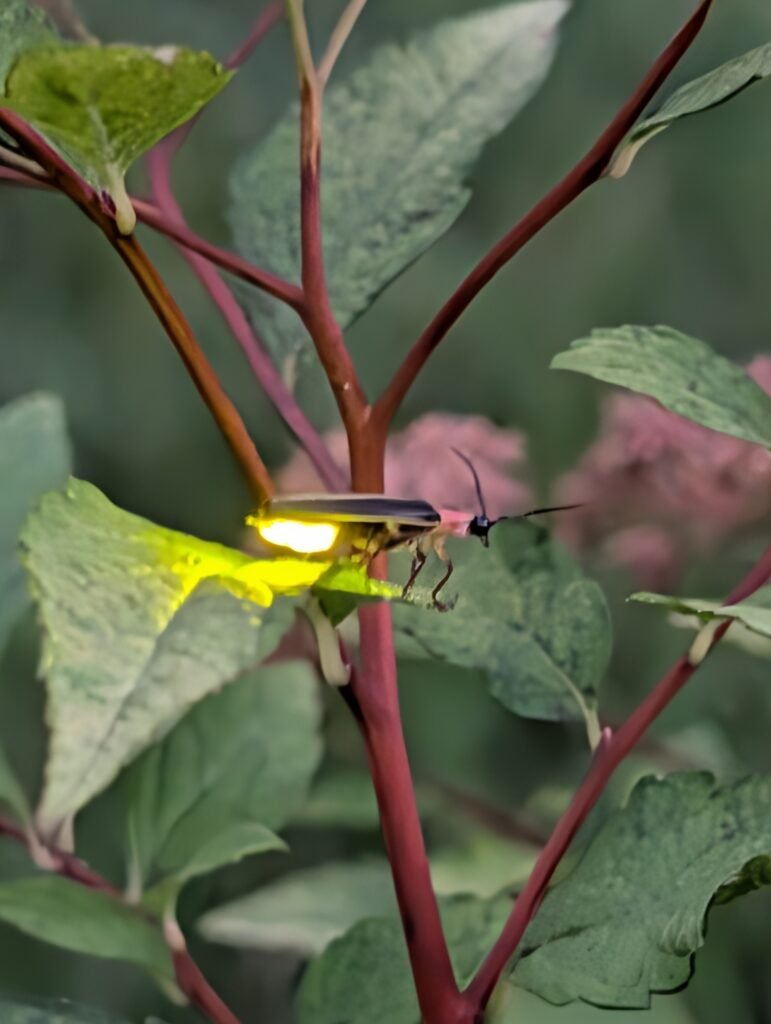
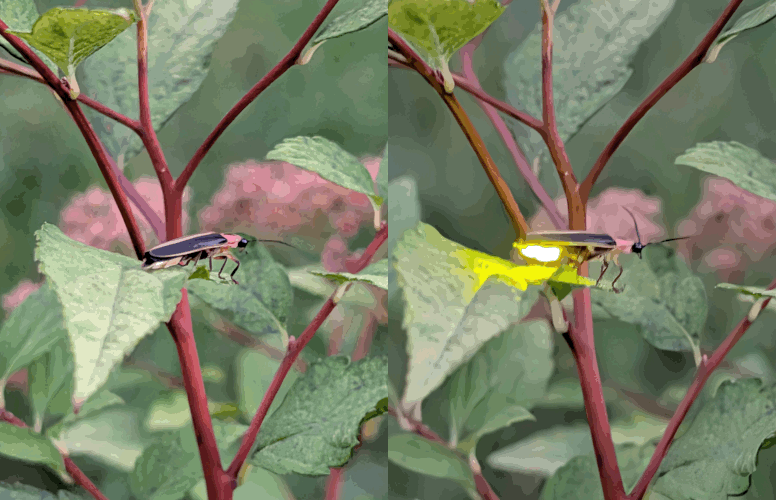
If I were a more competent editor, I could align these shots for a better animation, but it’s still a fun visual.
Using a zoom on stationary fireflies really allows the glowing to pop. I was shocked to see how much their tiny bodies can illuminate on foliage.


These visuals are clearly an improvement, but they still illustrate a difficulty, which is particularly evident in the video.
Especially zoomed in, these critters are just too active to produce pristine photos and video by hand. A tripod to keep the sensors steady is necessary, but then you’ll lose the ability to follow the movement. Not to mention, it’s tedious to combine focus, timing, and stability to get good shots of the fireflies. Worth it, but not something the muscles in my hand could handle over a month.
It became evident why many of the most incredible firefly images make use of time-lapses. You don’t have to chase them, and the background won’t be blurry. Of course, you do lose the detail of close-ups, but the results can veer more into an artistic realm than a realistic.
Can we employ smartphones or compact action cameras, such as a GoPro, to make easy time-lapse images of fireflies?
In short, the answer is yes, but it’s not quite as simple as mounting the cameras on a tripod and hitting go.
After weeks of tinkering with settings and approaches, I was able to create something neat.
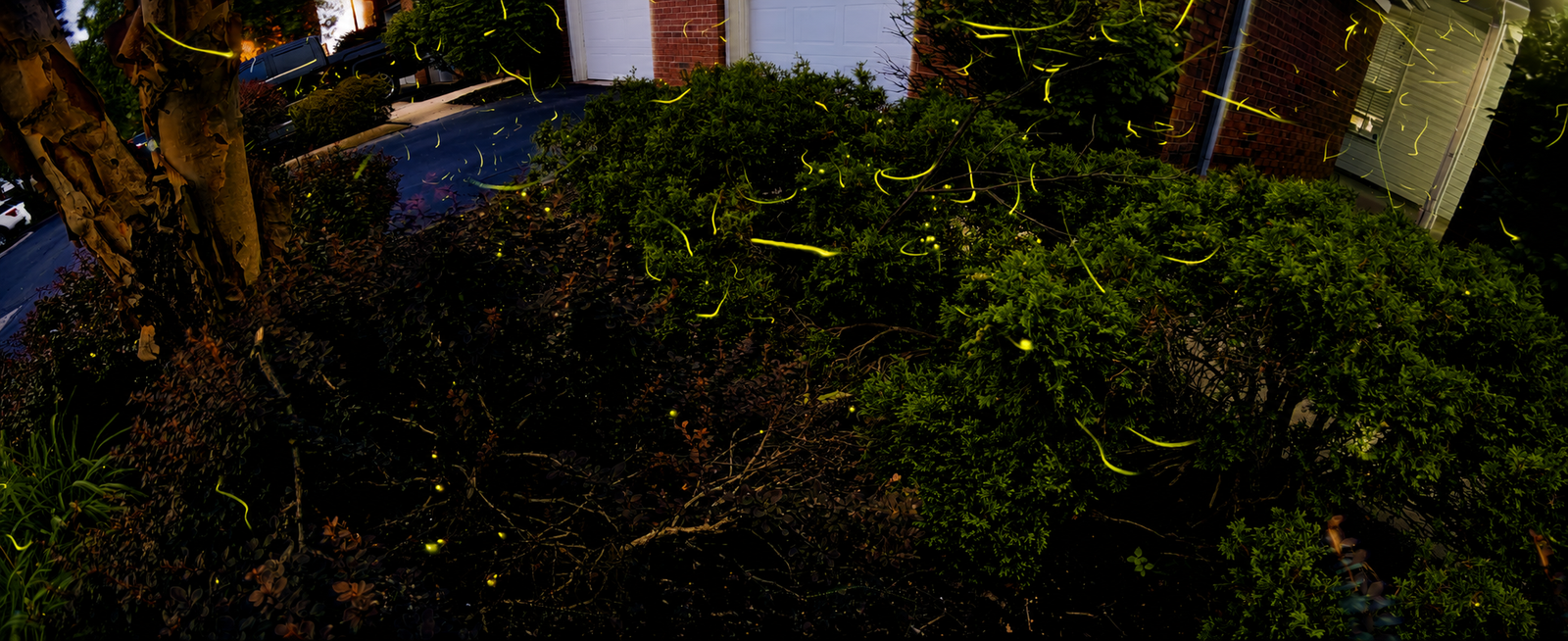
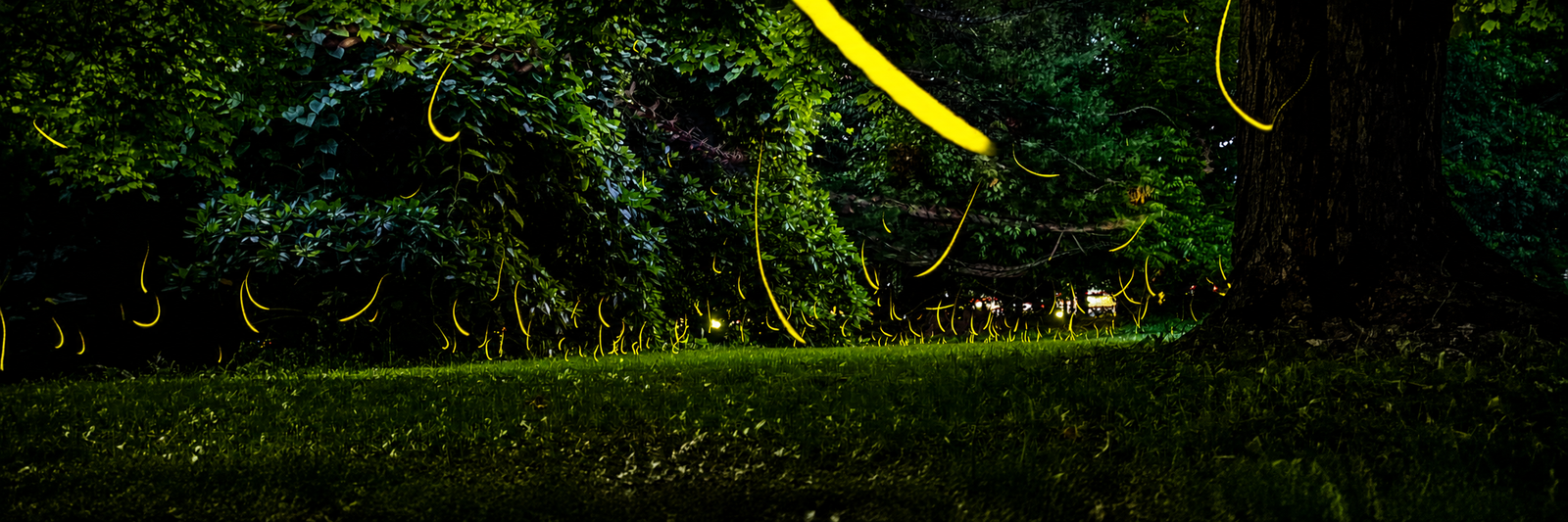
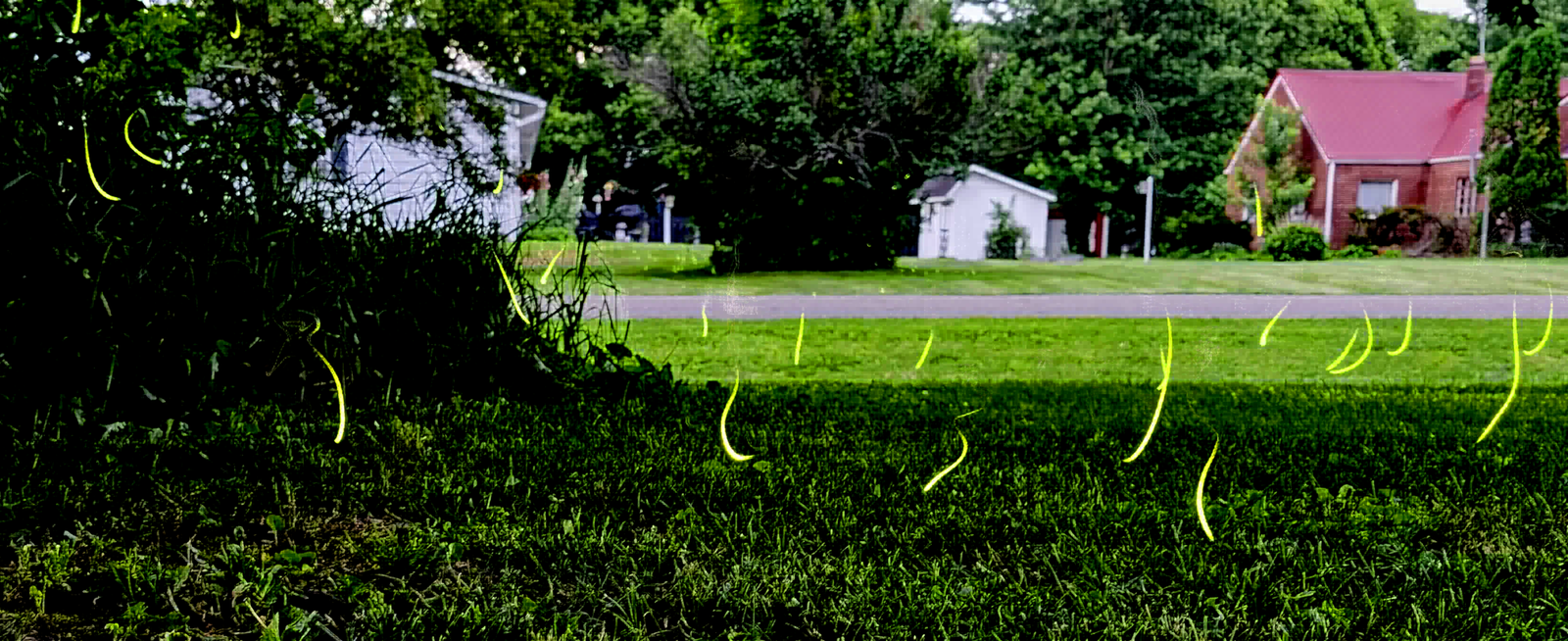
(You can click the images to view them in higher resolution)
The process I employed for the above images differed depending on the camera.
For the top, I utilized a GoPro. Initially, I attempted time-lapse videos, but the results were underwhelming because the exposure lengths didn’t properly capture flashes. Next, I tried night-lapse photography over a long period, but the image again turned out with little evidence of lightning. In the end, I needed to set the shutter length to multiple seconds and let the camera run for 30 minutes to get enough action.
Next, I took all the still images and uploaded them to a program called StarStax, which is designed for astrophotography. The program takes multiple images and creates one big stack. Designed for the stars, it fittingly worked for these Night Suns.
I still wasn’t finished, as the resulting image appeared too bright, as a result of firefly timing. The biggest issue with firefly time-lapse, in my experience, is that they emerge too far before sundown for optimal contrast and lighting. Most of the blinks happen when there is too much residual sunlight for the photo to appear as it does to human eyes, especially as you stack the images together. Further complicating the problem is the changing amount of light. As the series progresses, the Sun continues to sink, meaning the background of snap one is much brighter than the background of the final snap.
To rectify this situation, the levels of saturation, contrast, and hues needed to be adjusted in photo editing programs.
Since I was so pleased with the GoPro outcome, I wanted to see if I could replicate the process with my phone’s camera. Google’s Pixel phones have wonderful, built-in astrophotography settings, so I thought it might be relatively easy to gather what I wanted. Unfortunately, the amount of control over exposure and shutter lengths, even with custom camera applications, didn’t really translate to good firefly lapses.
So, the bottom two images above were crafted by taking high-definition video. I used a program to extract all the frames from the footage (in the case of the middle image, it was 30,000 images!), then loaded them into StarStax, before messing with color levels again.
Each streak you see is the result of a single blinking firefly, moving over the course of a split second and many dozens of individual frames. They move around so much and so quickly that they smear glow sticks all over the image.
I was interested to discover what the image might look like if each firefly were only a distinct flash, not a moving streak. I could go frame-by-frame to select either the start of the flash from each individual or to pick the brightest spot. However, with thousands of frames, this process quickly became untenable for my purposes. So, I decided to hone my programming skills. I ran the frames from the third image above through a program designed to flag changes in brightness image by image. The script spat out frame numbers, which allowed me to know where in the sequence the fireflies were at work. From there, I could select the best still that showed each beetle as a distinct dot.
Here is the constellation as single stars!
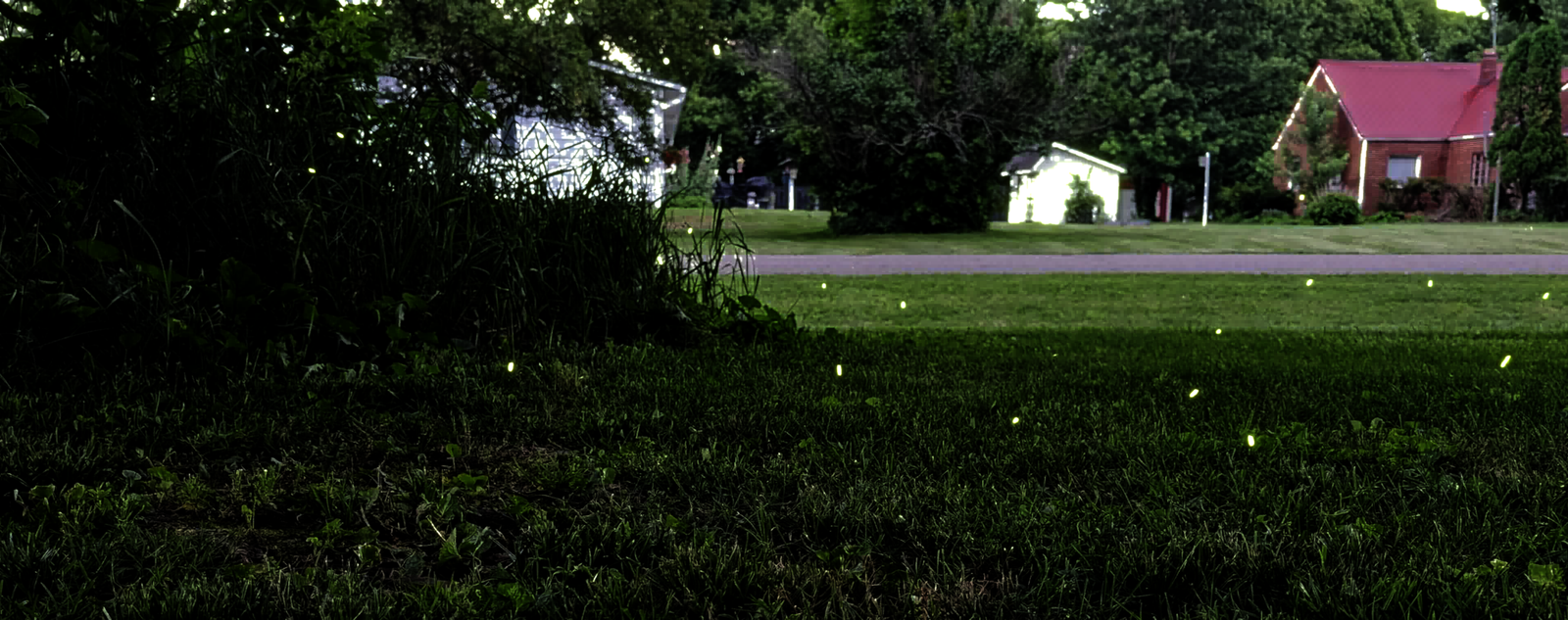
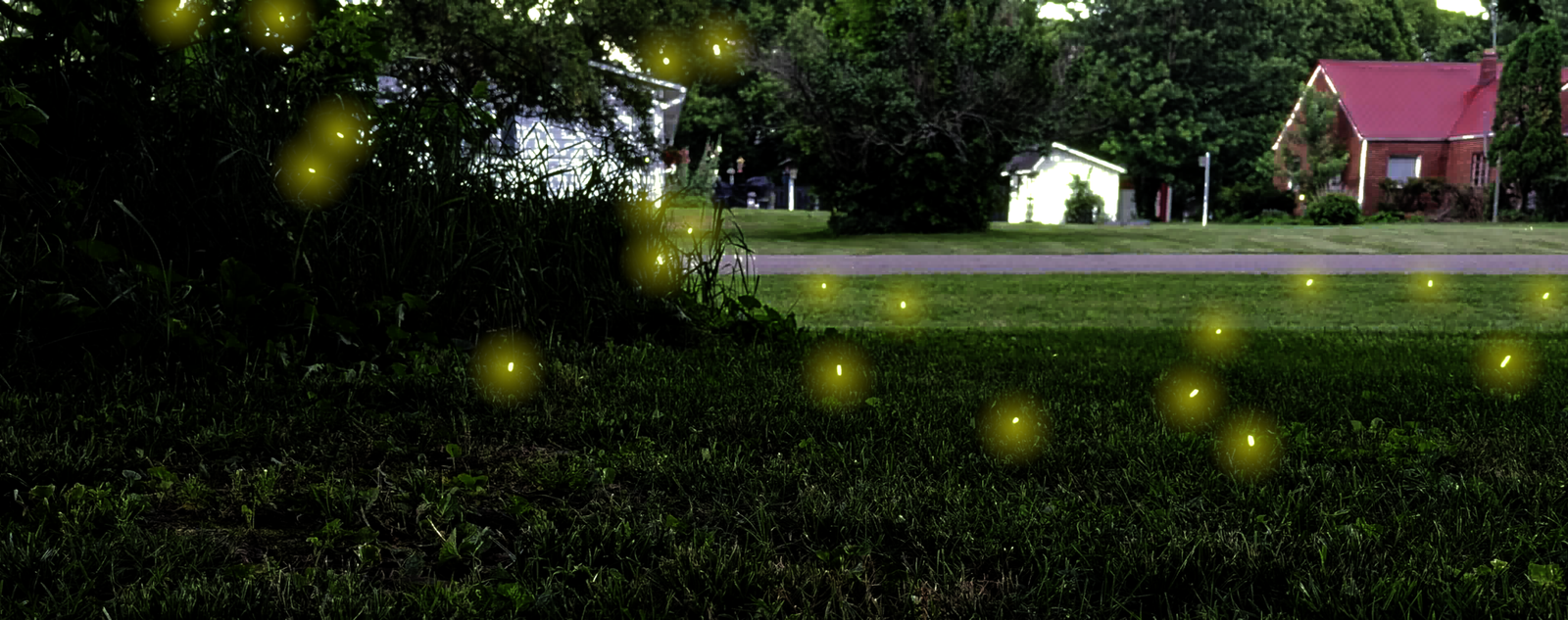
The image is still too bright to really have the individuals shine, so I added some glow to the second image to easily see the culprits.
Obviously, I have a long way to go to match some of the best firefly photographers. My image-editing abilities could improve, and I could choose some darker spots to ameliorate some of the lighting issues with sunsets. Spots in a forest with open floors might be ideal, but I haven’t had the time or chance to get to such a location yet.
Still, I think it’s safe to say we moved relatively quickly from shaky, muddled globs of light to decent time-lapse images! My photo and programming skills got a boost, but the real treasure was in the time I spent outdoors in the midst of one of my favorite creatures. Fireflies are magic to me, and every second of this time of year I spend in their presence is a second of tranquility.
Further Reading and Exploration
Fireflies: Suns of the Terrestrial Night – The Mountains Are Calling
The Best Time of Year – The Mountains Are Calling
Firefly Experience – Radim Schreiber