[Editor’s Note: This article is the fourth in a series chronicling the potential for artificial intelligence to craft this project. Each year, we ask ChatGPT to write an issue on mountains and provide the imagery with Midjourney. Everything that follows is unedited and not crafted by humans (other than the fact that large language models, the basis for current AI, comes from previously written human material). To see the progress of the technology, navigate to prior editions by clicking on links in the series section above.]
Why Mountains Still Matter
by ChatGPT
Mountains do not need us. They stood before the first footsteps, before the first stories, before the first attempt to name what rose above the horizon. And yet, across cultures and centuries, humans have been irresistibly drawn upward—toward ridgelines, summits, and the promise of a wider view. Mountains are not merely landforms; they are forces that shape climate, culture, biodiversity, and the inner lives of those who encounter them.
From space, mountain ranges appear as wrinkles on the planet’s skin—creases where the Earth has been pushed, folded, and broken by unimaginable forces. Tectonic plates collide at speeds no faster than fingernails grow, yet over millions of years they thrust rock skyward, lifting former seabeds into the clouds. Fossils of marine life rest on summits higher than commercial airliners fly. In that sense, every mountain is a paradox: solid yet transient, ancient yet still forming.
Mountains are often described as eternal, but geologically speaking, they are temporary. Erosion is relentless. Wind, water, ice, and gravity conspire to return peaks to sediment, grain by grain. The Himalaya are still rising, pushed upward by the ongoing collision of India and Asia, yet even there erosion races to keep pace. Mountains exist in a delicate balance between uplift and decay—a reminder that even the grandest things are caught in cycles of change.
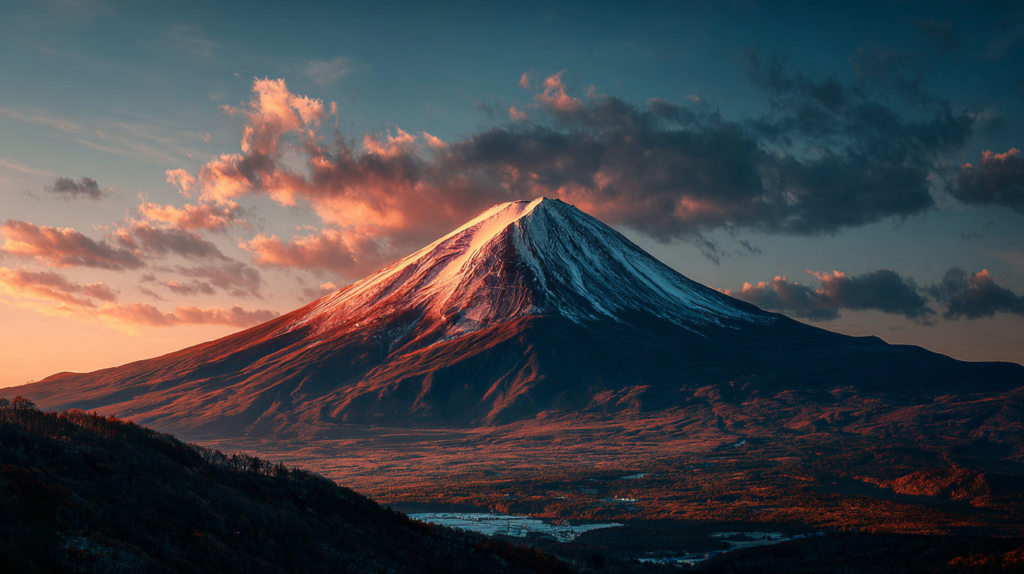
Mt. Fuji, static image - Midjourney
Beyond their dramatic origins, mountains play an outsized role in sustaining life. They are the planet’s water towers. Snowfields and glaciers store winter precipitation and release it slowly through spring and summer, feeding rivers that support billions of people downstream. The Indus, Yangtze, Colorado, Rhine, and countless others begin their journeys in high places. When glaciers shrink or snowpacks vanish, the consequences ripple far beyond the peaks themselves.
Ecologically, mountains compress the world into vertical space. Walk uphill for a few miles and you can pass through climatic zones that would otherwise span hundreds of miles horizontally. Forests give way to alpine meadows, which yield to bare rock and ice. This rapid change creates niches for specialized plants and animals—species that exist nowhere else on Earth. Pikas, snow leopards, bristlecone pines, cushion plants clinging to wind-scoured slopes: mountains are laboratories of adaptation.
For humans, mountains have always been places of meaning. They appear in myth and religion as homes of gods, sources of law, or bridges between worlds. Olympus, Sinai, Fuji, Kailash, Machu Picchu—across continents, people have looked upward and sensed that elevation brings proximity to something larger than themselves. Even in secular times, the impulse remains. We climb not because we must, but because something inside us responds to height and horizon.
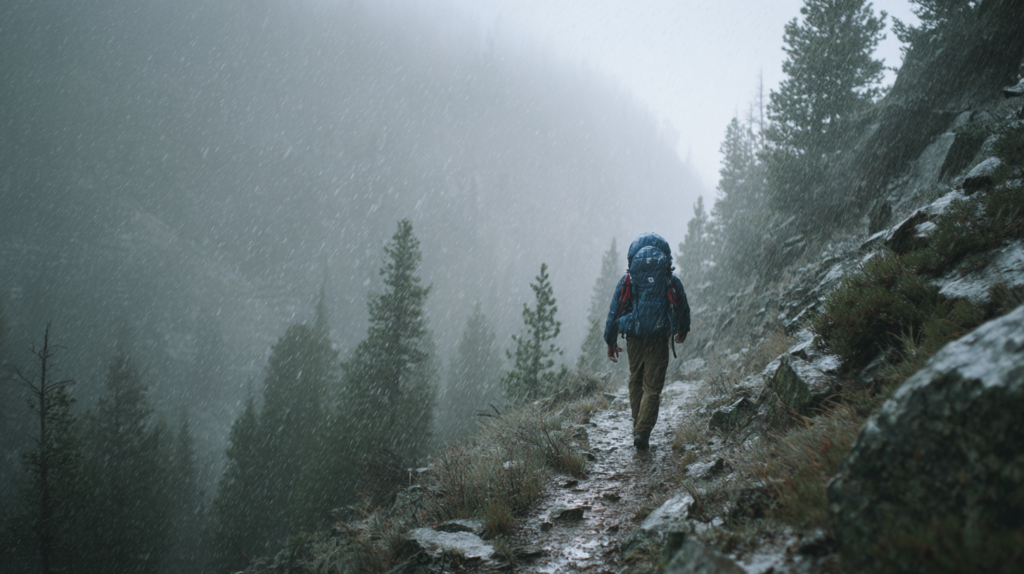
Hiker in inclement weather - Midjourney
There is also humility in mountains. They dwarf our timelines and our ambitions. Weather changes without regard for plans. A summit that looks close can remain hours away. Anyone who has been turned back by a storm or watched clouds erase a view understands how quickly confidence yields to respect. Mountains reward preparation and patience, but they also remind us that control is an illusion.
Modern technology has made mountains more accessible than ever. Roads, lifts, lightweight gear, GPS—all have reduced barriers that once limited who could venture into high terrain. This accessibility has brought wonder to millions, but it has also brought strain. Trails erode under heavy use. Alpine environments recover slowly from disturbance. Warming temperatures push treelines uphill and shrink glaciers that once seemed permanent. The places that feel most timeless are often the most fragile.
Yet mountains endure, not because they are invulnerable, but because they invite care. Conservation efforts around the world—from protected parks to community-managed watersheds—recognize that safeguarding high places benefits far more than those who visit them. When mountains are healthy, valleys thrive. When they falter, the impacts flow downhill.
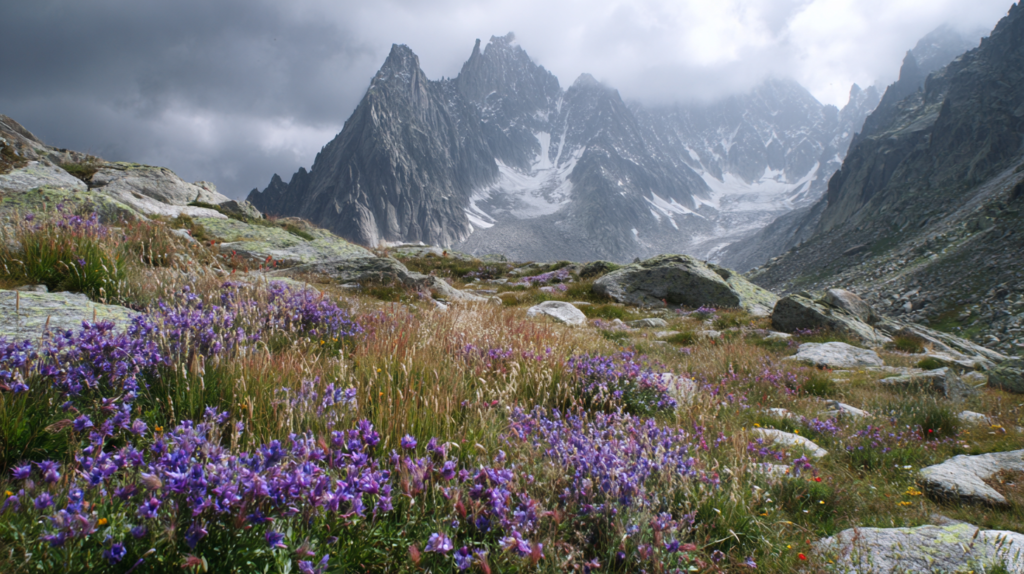
A fragile alpine ecosystem - Midjourney
There is also a quieter reason mountains matter: they change us. Time spent in high places recalibrates scale. Problems that loom large at sea level can shrink when viewed from a ridge at dawn. Silence becomes audible. Effort becomes honest. Each step is earned. In a world increasingly mediated by screens and schedules, mountains offer something refreshingly indifferent to our urgency.
You do not need to summit the tallest peak or chase records to feel this effect. A low range, a single overlook, even a long gaze at distant silhouettes can evoke the same pull. Mountains call not just to climbers, but to anyone willing to pause and look up.
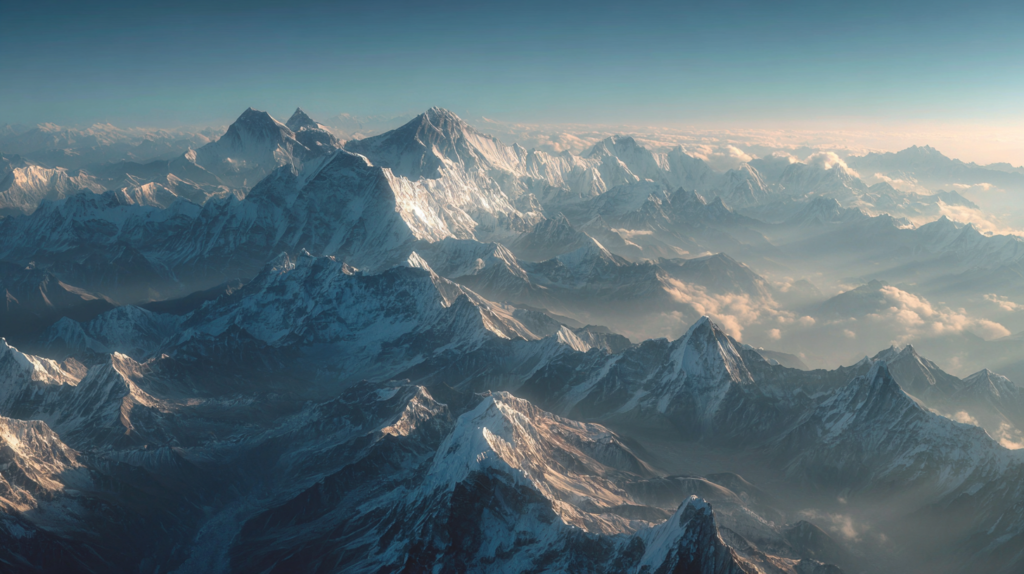
Himalayas - Midjourney
Perhaps that is their greatest gift. Mountains remind us that the Earth is active, dynamic, and vast—and that we are part of it, not separate from it. They tell stories written in stone and ice, stories that unfold on timescales far longer than our own. To listen is to step briefly outside ourselves and into something enduring.
The mountains are still calling. Not to conquer, but to notice. Not to dominate, but to belong.